Get Healthy!
- Posted April 3, 2026
Nerve Stimulation Therapy May Ease Fibromyalgia Pain, Fatigue
In its first "real-world" trial, the nerve stimulation treatment called TENS appeared to reduce the pain and tiredness of fibromyalgia.
"The study shows that TENS provides an added benefit on top of any relief from other treatments," said study first author Dana Dailey of the University of Iowa.
"All the study participants were also using pain medications and receiving physical therapy, yet TENS still provided additional relief," noted Dailey, who is an assistant research scientist at the university.
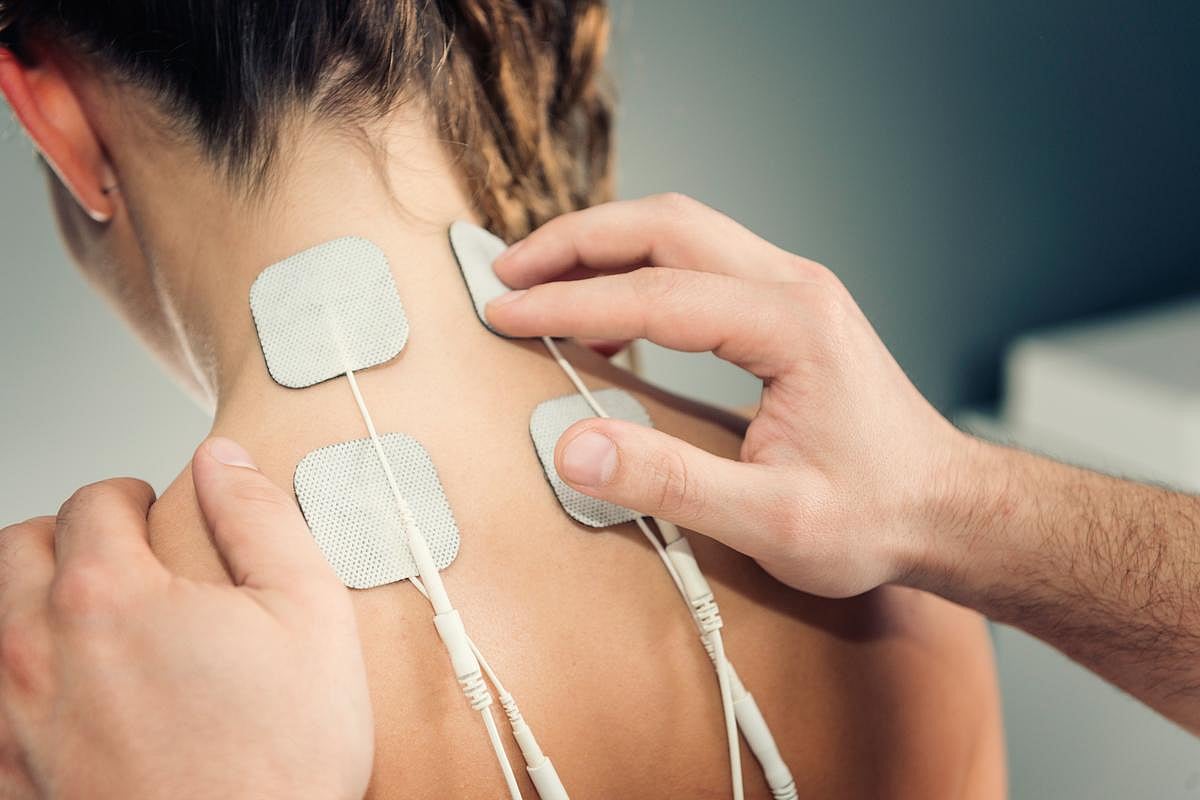
TENS stands for "transcutaneous electrical nerve stimulation," a long-used outpatient therapy using adhesive electrodes. The electrodes pass a mild electrical current through the skin to either stop or reduce pain.
In the new study, published March 27 in JAMA Network Open, TENS equaled or exceeded other U.S. government-approved treatments used to ease fibromyalgia.
“It is one of the few treatments that specifically targets movement-evoked pain and fatigue, which are major barriers to participation in daily activities,” noted study senior author Kathleen Sluka. She is a professor of physical therapy and rehabilitation science at the university.
While there have been prior studies assessing TENS for fibromyalgia, they were all conducted as rigorously controlled clinical trials.
The new study, which involved 384 patients from 28 outpatient clinics across the United States, was the therapy's first "real world" test, the researchers explained.
Patients either got TENS combined with physical therapy or they received physical therapy alone. In the TENS group, people received the treatment two hours per day for six months. The therapy could be done all at once or spread out over the course of the day.
TENS electrodes were placed on each patient's back (upper and lower) and calibrated to intensities they could reasonably tolerate.
At the 60-day mark, patients who received TENS were already experiencing reductions in pain, the researchers said, and that included pain at rest or during movement.
No such lowering of movement-linked pain was seen among patients in the group that got physical therapy (PT) alone.
Folks who stuck to the daily regimen got the best results, the Iowa team said.
“When we gave the PT-only patients the TENS unit and they started using it, we also saw the same improvements as the PT with TENS patients, which is powerful,” Sluka noted.
Overall, 80% of patients who used TENS found it helpful, and at six months, 80% of patients were still using the therapy.
Besides the pain reduction, "we were excited to see that patients also had less fatigue,” Sluka said. “Right now, there are no good treatments for fatigue. So, the fact that we had anything that touched the fatigue was pretty powerful.”
The bottom line: "Often, when you move a randomized, controlled clinical trial into a real-world setting, it doesn't work because there are too many confounding factors," Sluka said. "But this intervention still works."
More information
Find out more about TENS at the Cleveland Clinic.
SOURCE: University of Iowa, news release, March 27, 2026
